-
What Goes Into Emergency Board Up
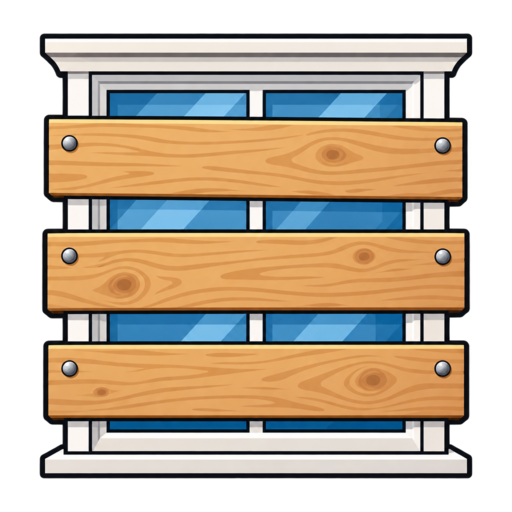
Emergency board up is the temporary sealing of broken windows, smashed doors and fire-damaged or storm-torn openings with plywood or OSB fastened to the building's framing, so weather, animals and intruders stay out until permanent repairs happen. A shattered pane or a kicked-in door leaves the house open to rain, which soaks drywall, insulation and subfloor within hours and starts mold within a couple of days. An open hole also makes the property easy to loot, and many insurance policies expect the owner to prevent further damage once a loss happens. Proper board up covers more than nailing a sheet over the hole. It includes clearing loose glass, fastening into solid framing instead of crumbling trim, keeping one door usable for entry, and sealing the edges so wind-driven rain can't run behind the panel.
-
Signs You Need Emergency Board Up
Window glass is the most common call: a pane cracked into a spiderweb, shards on the sill, and wind whistling through the gap. Openings on the ground floor or facing the prevailing storm matter most, since rain and intruders reach them first. Damage spreads quickly once a frame racks or water wicks into the wall.
- Window shattered by a break-in, stray ball or fallen branch
- Entry door frame split after forced entry
- Openings left by firefighters venting a roof or window
- Storm debris punching through a sliding glass door
- Vehicle impact leaving a hole in a wall or storefront
- Vacant property with broken glass inviting squatters
-
Our Emergency Board Up Process
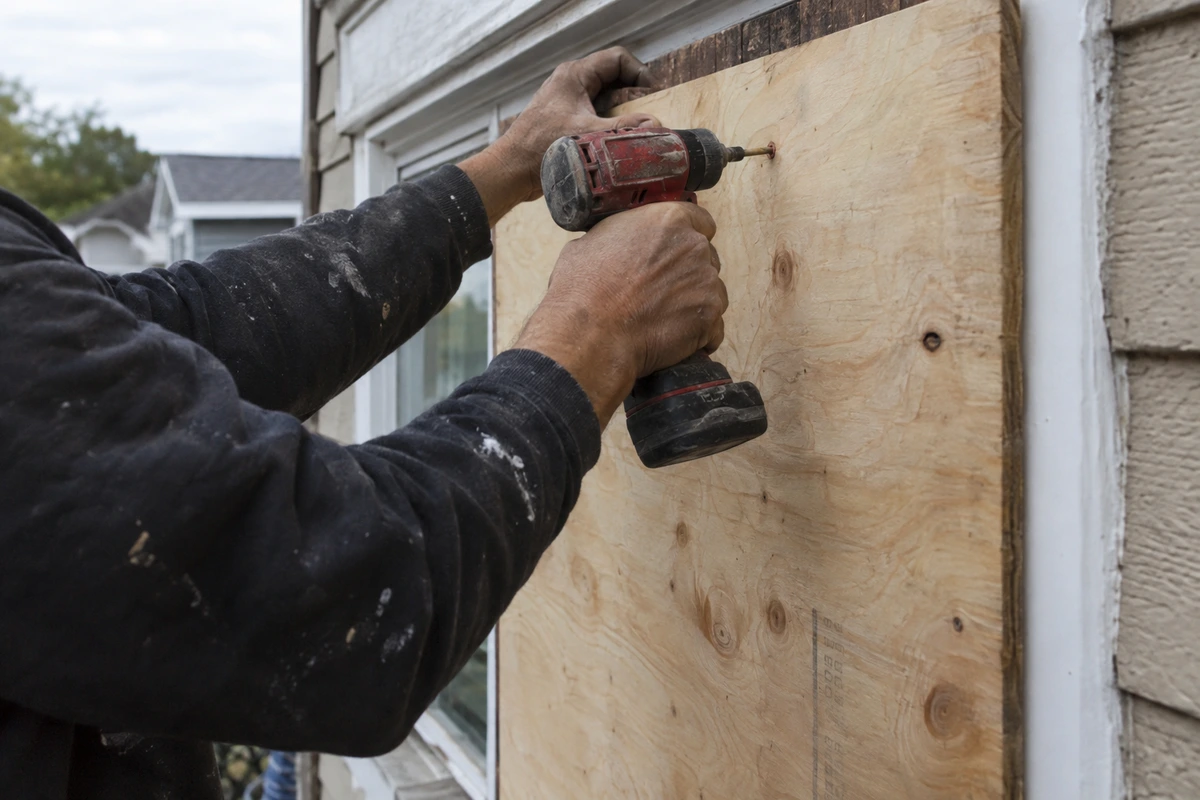
A tape measure across each opening, taken at the outer edge of the casing or brick mold, sets the panel size, with a few inches of overlap added so the sheet lands on solid wood. While measuring, the crew checks each frame for charring, rot or splits, since damaged framing changes where fasteners can go. Loose glass gets knocked out of the sash with a gloved hand or hammer handle and swept up, and remaining shards get taped. Plywood gets cut to size on a circular saw at the truck. Each panel is held in place and screwed through the casing into the studs and header every 6 to 12 inches, and on fire jobs we often run 2x4 strongbacks across the inside and through-bolt the panel to them. One door gets a hinged panel with a hasp and padlock so the owner and adjusters can still get in. Exposed roof holes get tarped and battened. We finish by pushing on every panel to check for flex, photographing each opening for the insurance file, and caulking any top edge exposed to rain.
-
Tools and Materials for Emergency Board Up
Half-inch or thicker CDX plywood is the standard panel because it holds screws near the edges and stands up to wind better than thin luan or hardboard. OSB of similar thickness works on interior or sheltered openings but swells badly at cut edges once rain soaks it. Exterior-rated construction screws, around 3 inches long, are chosen over nails because they pull the panel tight and back out cleanly later without splitting trim. Carriage bolts and 2x4 strongbacks secure panels from the inside where a fire left the exterior frame too weak to screw into. Reinforced poly tarps held with wood battens cover roof openings, since staples alone tear out in the first gust. A cordless impact driver sets hundreds of screws without needing power on a damaged property.
-
Can You Do Emergency Board Up Yourself?
The single ground-floor window side of the job is homeowner work; the fire-damaged, second-story and roof side is not. Someone with a circular saw, a drill and a sheet of plywood can cover a broken first-floor window within reach of a stepladder, as long as they wear cut-resistant gloves and screw into sound casing. The line comes at anything requiring an extension ladder, any roof opening, any frame that's charred or soft, and storefront glass heavy enough to fall out in large sheets. Fire scenes also carry structural damage and soot hazards. Utilities cut by the fire department should be restored by a licensed electrician or gas technician, not the owner.
-
Factors That Change an Emergency Board Up Job
Covering one cracked bedroom window from a stepladder sits at one end, while sealing a burned two-story house with vented roof sections sits at the other. Frame condition around each opening decides whether panels screw on or need through-bolted strongbacks.
- Number and size of broken openings
- Height of openings above the ground
- Fire, smoke or water damage weakening the framing
- Sliding doors or storefront glass needing oversized panels
- Roof holes requiring tarps and battens
- Wall finish like brick, stucco or vinyl siding
-
How Long Does Emergency Board Up Take and Last?
A typical emergency board up job runs usually 30 minutes to two hours, covering a few broken windows or a forced door on a single-story house. Fire-damaged homes, storefronts and anything needing roof tarping typically stretch to half a day or more, especially at night or in heavy rain. Plywood panels are meant as a stopgap and generally hold well for several weeks to a few months. After that, sun and moisture delaminate untreated edges, screws loosen as framing dries, and tarps degrade from UV within roughly 60 to 90 days, so long insurance delays usually mean re-securing or replacing panels.
-
Upkeep and Next Steps After Emergency Board Up
Walking the property weekly matters most, pushing on each panel and checking tarp battens after any storm. Loose screws, peeled edges or water stains on interior walls show the seal is failing before damage spreads further indoors.
- Retighten panel screws whenever a sheet flexes or rattles
- Replace tarps showing tears or sun brittleness
- Have a glazier measure and install replacement glass
- Bring in a carpenter to rebuild damaged frames and doors
- Call a restoration crew to dry out soaked walls
-
How Much Does Emergency Board Up Cost?
Emergency board up typically runs between $285 and $2,850. A single ground-floor window falls at the low end, while a fire-damaged two-story house that also needs roof tarping lands at the high end. Most of the price comes down to how many openings need covering, how large they are, and whether the crew needs extension ladders to reach second-story glass. Charred or soft framing raises the cost because the panels have to be through-bolted to 2x4 strongbacks. After-hours calls during storms usually carry a surcharge on top of materials.
Where We Work
We provide services nationwide, including in the following cities:
Minnesota
- Albert Lea, MN
- Albertville, MN
- Andover, MN
- Anoka, MN
- Apple Valley, MN
- Arden Hills, MN
- Austin, MN
- Big Lake, MN
- Big Lake Township, MN
- Blaine, MN
- Bloomington, MN
- Brooklyn Center, MN
- Brooklyn Park, MN
- Buffalo, MN
- Burnsville, MN
- Cambridge, MN
- Champlin, MN
- Chanhassen, MN
- Chaska, MN
- Columbia Heights, MN
- Coon Rapids, MN
- Corcoran, MN
- Cottage Grove, MN
- Crystal, MN
- Dayton, MN
- Eagan, MN
- East Bethel, MN
- Eden Prairie, MN
- Edina, MN
- Elk River, MN
- Faribault, MN
- Farmington, MN
- Forest Lake, MN
- Fridley, MN
- Golden Valley, MN
- Ham Lake, MN
- Hastings, MN
- Hopkins, MN
- Hugo, MN
- Hutchinson, MN
- Inver Grove Heights, MN
- Lake Elmo, MN
- Lakeville, MN
- Lino Lakes, MN
- Little Canada, MN
- Mahtomedi, MN
- Mankato, MN
- Maple Grove, MN
- Maplewood, MN
- Mendota Heights, MN
- Minneapolis, MN
- Minnetonka, MN
- Minnetrista, MN
- Monticello, MN
- Mound, MN
- Mounds View, MN
- New Brighton, MN
- New Hope, MN
- New Prague, MN
- North Branch, MN
- North St. Paul, MN
- Northfield, MN
- Oak Grove, MN
- Oakdale, MN
- Orono, MN
- Otsego, MN
- Owatonna, MN
- Plymouth, MN
- Prior Lake, MN
- Ramsey, MN
- Red Wing, MN
- Richfield, MN
- Robbinsdale, MN
- Rogers, MN
- Rosemount, MN
- Roseville, MN
- Sartell, MN
- Sauk Rapids, MN
- Savage, MN
- Shakopee, MN
- Shoreview, MN
- South St. Paul, MN
- St. Anthony, MN
- St. Cloud, MN
- St. Francis, MN
- St. Louis Park, MN
- St. Michael, MN
- St. Paul, MN
- Stillwater, MN
- Vadnais Heights, MN
- Victoria, MN
- Waconia, MN
- West St. Paul, MN
- White Bear Lake, MN
- White Bear Township, MN
- Willmar, MN
- Woodbury, MN
- Wyoming, MN